Step 1
Tell us the item.
Brand, model, and size are enough for us to scope a trampoline assembly job. Send a product link and we'll come back with a fixed price and a booking time that holds.
“Trampoline (springless) relocation and install by Daniel. Was faultless service and comms and I simply could not recommend highly enough. Was even installed on long weekend.”
“Perfect service from communication to workmanship. Highly recommend”
“Wand is a fantastic service, putting together a complicated outset furniture set that we didn't have the skills for. Daniel arrived on time, did a perfect job and took all packaging away, leaving a quality result and very happy customers! Highly recommend this company, thank you Daniel, will have plenty more jobs in the future. 10/10”
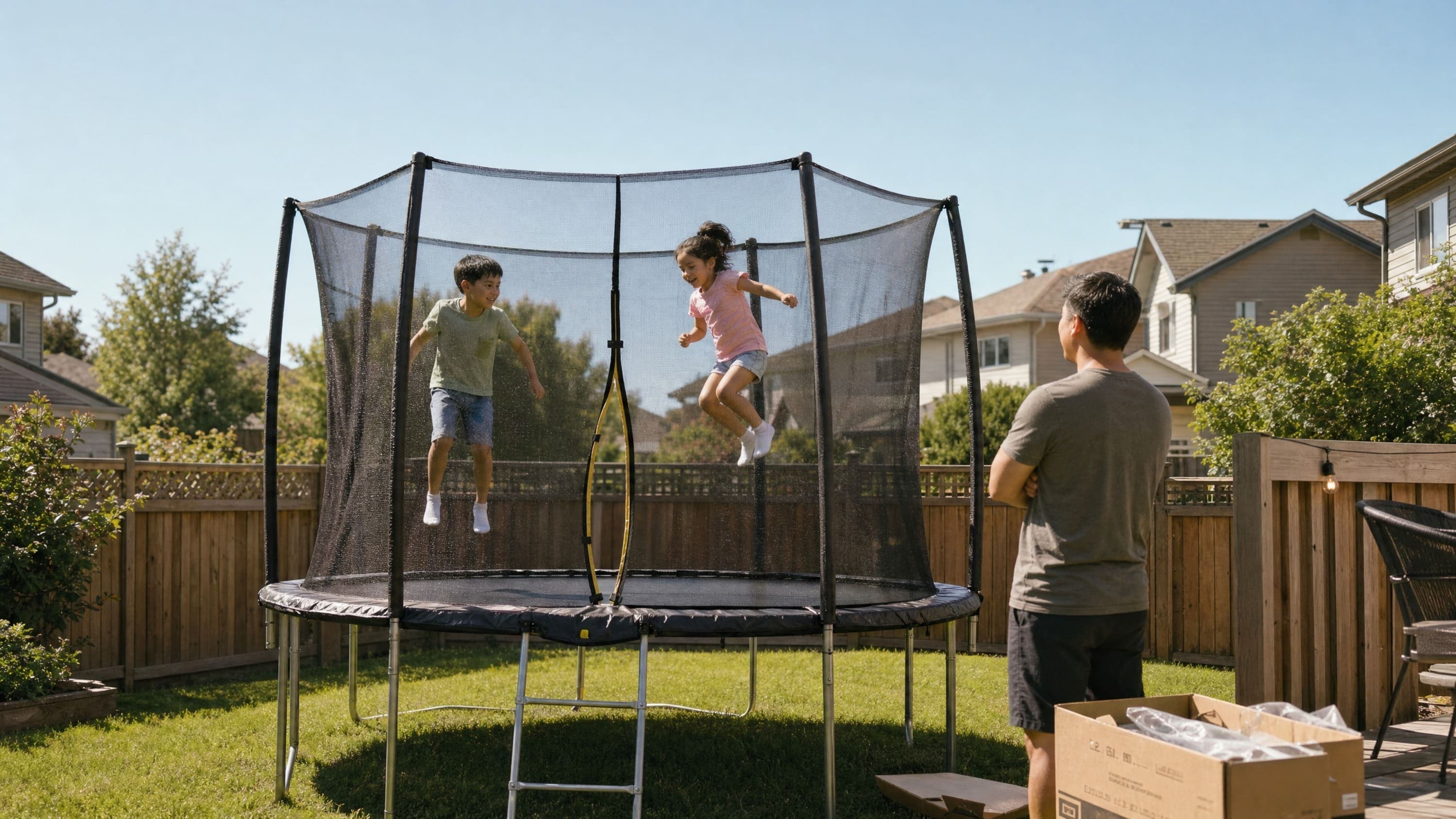
Trampoline assembly is one of the more physical flatpack jobs there is: a frame to build square, dozens of springs to thread with a spring tool, and a safety net to fit. Here's what the work covers.
The core build covers above-ground round trampolines, oval trampolines, rectangular gymnastic trampolines, in-ground trampoline systems, and rod-based trampolines like Springfree (which uses fibreglass rods in place of metal springs). The work follows the same broad sequence: lay out and check the parts against the manifest, build the frame square so the mat sits true, fit the mat or jumping surface, install springs or rods to even tension all around, and fit the protective pad over the spring or rod ring so no spring is exposed. Even tension is the detail that separates a good build from a wobbly one. If a few springs are looser than the rest, the mat develops a low spot under load and the bounce becomes uneven. We work the springs in opposite-side order to keep tension balanced as we go.
Modern trampolines almost always come with a safety net (also called an enclosure) that surrounds the jumping surface and prevents falls off the edge. The net is the most tedious part of the assembly: poles to thread, padding to fit over the poles, the net itself to thread through every pole and around the perimeter, and the zip or velcro entry to align. A loose net is a safety problem; a too-tight net tears at the seams within a season. We tension the net evenly, secure every pole connection to the frame, and check the entry zips work cleanly. On rod-based systems like Springfree, the net attaches to the same rods that hold the mat and requires its own technique.
Auckland gets gusty. A 14ft trampoline can catch wind like a kite, and an unanchored trampoline has been known to clear a fence in a strong westerly. Most trampolines now ship with a wind anchor kit (corkscrew stakes attached to straps that loop over the frame). Where the kit is supplied, we install it as part of the build. Ladders, basketball-hoop attachments, and other accessories that came in the box are fitted at the same time. Once the trampoline is built, anchored, and tested, the packaging leaves with us: cardboard, polystyrene, the box-board, plastic wrap, and the bag of spare bolts. The lawn is left clear before we go.
Starting at
Every trampoline assembly includes...