Step 1
Tell us the item.
Brand, model, and size are enough for us to scope a pergola assembly job. Send a product link and we'll come back with a fixed price and a booking time that holds.
“Perfect service from communication to workmanship. Highly recommend”
“Wand is a fantastic service, putting together a complicated outset furniture set that we didn't have the skills for. Daniel arrived on time, did a perfect job and took all packaging away, leaving a quality result and very happy customers! Highly recommend this company, thank you Daniel, will have plenty more jobs in the future. 10/10”
“Trampoline (springless) relocation and install by Daniel. Was faultless service and comms and I simply could not recommend highly enough. Was even installed on long weekend.”
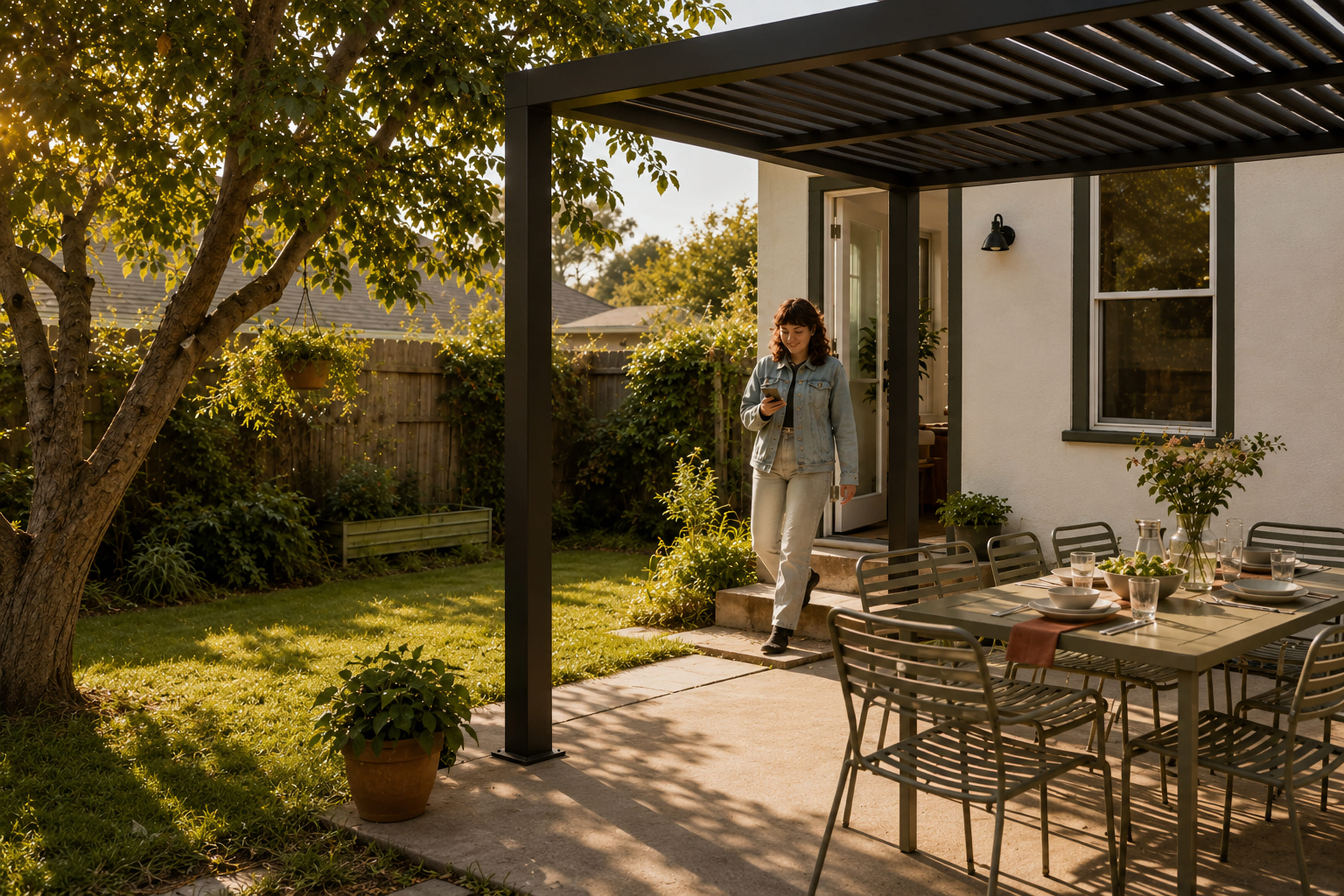
Pergola assembly sits between a deck build and a shed build in difficulty. The posts and beams are heavy, the kit's going to live outside year-round, and any mistake at the base means everything above sits out of level. Here's what the work covers.
The core build covers freestanding pergolas (sitting on four or more posts in your yard), wall-attached pergolas (with one side bolted to a house or other building), lean-to pergolas (single-sloped, attached on the high side), and the various combinations sold as "patio cover" or "verandah" across NZ retailers. Aluminium kitsets are the most common format and what most of the brand market (Stratco, Goldline, Aspect, Eclipse, Cooltop, Outback) supplies. Timber kitsets in treated pine or hardwood are heavier and have more finishing work. The work follows a methodical sequence: stand and brace the posts plumb against your prepared footings, set the headers and beams across the top, fit the rafters at the spacing the plan specifies, then add the roof system. Squareness at the base level is what matters most. If the posts aren't plumb and the headers aren't level, the rafters and roof above won't sit right.
Pergola roofs come in three main formats. Polycarbonate panels (clear, opal, or tinted) clip into the rafters or sit on top with brackets and need to be aligned so each panel overlaps the next correctly for water-tightness. Louvre roofs (manual hand-cranked or motorised) are more technical: the louvres themselves are aluminium slats that pivot in a frame, and the linkage between them needs to be set so they open and close in sync. Motorised louvre roofs have a control box that needs to be wired in by an electrician, which we don't do; we install the mechanical components and leave the wiring to your sparky. Shade sails or fabric panels are simpler but need their tension set evenly so the fabric doesn't sag or pull at the corners.
Pergolas need to be anchored to two things: the base they're standing on (or the structure they're attached to, for wall-mounted models) and, where supplied, additional bracing pieces that resist wind load. We anchor freestanding pergolas to your prepared footings using the manufacturer's post brackets and bolts. We anchor wall-attached pergolas to the house wall using fixings appropriate for the wall type (timber stud, masonry, weatherboard, brick). We don't prepare the base or the footings ourselves. That's foundation work and needs to be in place before assembly day. Once the pergola is built, anchored, and tested, the packaging leaves with us: pallet, plastic wrap, cardboard, the bag of spare bolts. The yard is left clear before we go.
Starting at
Every pergola assembly includes...